Class Notes

Class Notes

Acrosport is a part of Gymnastics. It is a team competition accompanied by music.

Teams must create different structures and build human pyramids in time with the music.


It is a sport that needs physical strength, stamina, rhythm, coordination and balance. It is a team sport, so your partners depend on you.

It combines the beauty of dance and  acrobatics. Gymnastics skills add excitement to the exercises.
Acrobatic balances show grace, strength and flexibility.
Choreography and synchronisation add beauty and creativity to each exercise.

 Here you have a video from your 4th year ESO partners:

VOCABULARY IN THIS UNIT:

Skills: habilidades                           Routine: rutina, la coreografía o  conjunto de ejercicios
Grace: gracia                                 Balance: equilibrio
Allowed: permitido                         Tempo: tempo
To be held: ser mantenido
Qualifying: clasificatorio
Safety: seguridad
Helpers: ayudantes
A corresponding/matching music: una música que le pegue


DID YOU KNOW THAT...?

Acrobatic Gymnastics develops body control in various positions. For this reason, the sport is included in the training program of pilots, cosmonauts and parachutists.

This sport is a group sport requiring athletes of all ages, shapes, and sizes. 

It is a very old activity,  Egyptians did human pyramids more than 2000 years ago.
Now it is a team sport and you can find different types of competitions:
Men's, Women's or Mixed Pairs, Women's Groups (3 gymnasts) and Men's Groups (4 gymnasts).

 WHAT IS AN ACROBATIC GYMNASTICS COMPETITION LIKE?

Time allowed for each exercise is  from two and a half to three minutes. Judges give points to teams depending on various aspects.
 
Balance and tempo are key elements.
Element combination and coordination with the music are determining factors for the value of the routine.
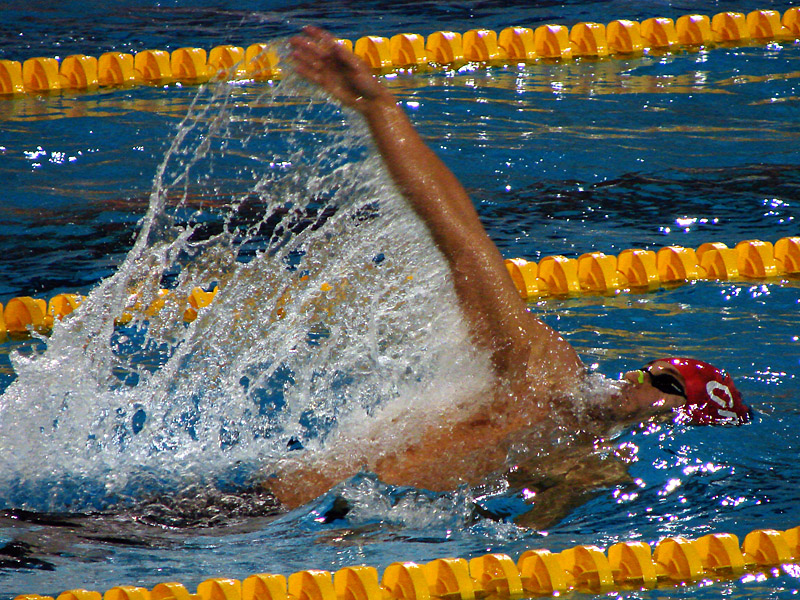

There is a wide range of different training methods. All are effective to some extent, and all place an emphasis on one or more of the fitness components that we have studied this courses.

1. Continuous training:

It involves working for a prolonged period of time without stopping.
At the beginning of the programme, the person may work for 20 minutes, but after a number of sessions, the time spent would increase, although the workload would probably remain the same.
There are two types:

-At a steady intensity (you don´t vary the pace). It is good for aerobic fitness and very easy to do.
-At different intensities (you combine different speeds without stopping: slow-fast-medium...). This is often called “fartlek” or "speed play". The advantages of fartleck are that it can be easily adapted to the individual and it mimicks de pater of games with a regular change of pace (football, basketball...)

In this type of training, you can increase the stress level if you:
      -increase the duration
      -increase the speed
      -decrease the rest periods                                         Image: Michiel Jelijs at Wikimedia Commons


2. Interval training:

This involves alternating periods of high intensity work with rest periods. During the rest periods the person may be inactive (their body stops moving) or they may work at a low intensity.

Some examples of interval training are:
     -Swimming 8 x 25m sprints with a 20 seconds rest between each
     -Runnning 10 x 100 m sprints with a 300m jog between each.

In this type of training, you can increase the stress level if you:
      - increase the speed of the sprint
      - increase the number of sprints
      - increase the distance
      - decrease the rest periods                              

      Image: Walter Mier at Wikimedia Commons

3. Circuit training:

This type of work includes a number of physical exercices performed one after the other in the form of a circle or circuit.
Circuits can be designed to buid up strength, increase endurance or speed. You can do all types of exercises: with the only load of your body (push-ups), with loads (dumbells, medicinal balls...), with benches, ropes, balls and other materials...

You must carefully select the exercices that best suit your objective.

        Image: www.ironaddictonline.com

The advantages of circuit training are that:
     -The variety of exercises prevents boredom
     -A lot of people can work in a small place at the same time
     -Any kind of exercise can be included.

In this type of training, you can increase the stress level if you:                                                                                 
      -increase the number of exercices
      -increase the number of laps to the circuit
      -increase the speed
      -decrease the rest periods                                                         

4. Weight training:

Weight training can be very similar to circuit training, but here the person completes a set of exercises in a certain order using weights.

Each station concentrates on a different part of the body. As training progresses, the weights can be made heavier and rest periods can be reduced.

As a general rule, it is agreed that to increase maximum strength, a person should lift heavy weights with few repetitions and a long rest between exercises.

To increase stamina, a light weight should be lifted with a large number of repetitions and a small rest between exercises.                            

Image: U.S. Navy photo by MCS Christopher Blachly at Wikimedia Commons


Here you have a video explaning the traning principles

and another one here explaining the most common training methods.

E) FIXED SITUATIONS

1. Face-off :
-At the start of a new period and after a correctly scored goal, teams take a face-off at the centre spot.
-When play is interrupted and the referee can´t decide what team must do a hit-in, a free-hit or a penalty shot, play is resumed with a face-off.
-Teams take face-offs at the nearest face-off dot, according to where the ball was at the interruption.

      You also do a face-off...
-When the ball is damaged or is not correctly playable.
-When a serious injury occurs or an injured player directly affects play.
-When a penalty shot does not result in a goal.
Image: wikipedia commons

2. Hit-in:
-When the ball leaves the rink, the non-offending team gets a hit-in.
-Hit-ins must be taken from where the ball leaves the rink.
-All opponents must be at least 3 m from the ball.
-The ball must be hit to start play. The player taking the hit-in must not touch the ball again before another player touches it.
-A hit-in can go directly into goal.


3. Free-hit:
-When a team commits an offence, the other team gets a free-hit.
-The free-hit must start where the offence was committed, but never closer to the goalkeeper´s area than 3.5 m.


4. Penalty shot:
-When an offence leading to a penalty shot is committed, a penalty shot is awarded to the non-offending team...
-The penalty shot must be taken from the centre spot.

      Offences leading to a penalty shot:
When a goal situation is interrupted, or prevented from occurring, because the defending team has committed an offence leading to a free-hit or a penalty.

Here you have an amazing video on floorball skills:

F) MAIN RULES:

1. Games can be played with three to five players and a goalie on the court for each team.

2. No catching ball or hands on ball, except for goalie, infraction results in a 2 min penalty.

3. No foot passes to another player, infraction results in a possession change, but players may kick the ball once onto their own stick.

4. No jumping (one foot must be on the ground when receiving the ball), infraction results in a free hit.

5. Players may not go down on two knees to make plays or block shots. Only the goalie may play from their knees, infraction results in a 2 min penalty.

6. Ball must be received on a stick below knee level, infraction results in a possession change. If contact is made with the ball above the knee, infraction results in a 2 min penalty.

7. Sticks must stay below waist level when shooting with a similar follow through allowed. Stick above waist on a shot will result in a 2 min penalty.

8. No stick checking, lifting, or slashing. A minor infraction results in a possession change, an infraction in a scoring position or repeated infraction results in a 2 min penalty.

9. No holding of stick, players, or shirt or general interference, infraction will result in a 2 min penalty.

10. No playing your stick between another player’s legs. Results in a possession change.

11. No body contact with the exception of incidental shoulder contact, infractions will result in a 2 min penalty.

12. No playing the ball with the head – infraction results in a 2 min penalty.

13. Repeated infractions result in a 2 min penalty.

G) BENCH PENALTIES

1. Offences leading to a 2 minute bench penalty:

-When a player kicks an opponent's stick.Image: wikipedia commons

-When a field player plays the ball above knee level with any part of his stick or his foot.

-When a player tackles or trips an opponent.

-When a player obstructs an opponent.

-When a field player actively obstructs the goalkeeper's throw-out.

-When a player violates the 3 m rule at a hit-in or a free-hit

-When a field player participates in play without a stick.

-When a field player stops or plays the ball when lying or sitting down.

-When a field player stops or plays the ball with his hand, arm or head.


2. Offences leading to a 5 minute bench penalty:

-When a field player, performs violent or dangerous strikes with his stick.

-When a field player uses his stick to hook an opponent's body.

-When a player throws his stick or other equipment on the rink to hit or try to hit the ball.

-When a player throws himself towards an opponent or attacks an opponent violently.

-When a player tackles, throws or trips an opponent against the board or the goal cage.

-When a player commits repeated offences, each leading to a 2 minute bench penalty.


H) Review: MAIN RULES OF FLOORBALL:

You can: Image: wikipedia commons

  • Hit or drive the ball with both sides of the stick
  • Play against the walls or rink
  • Stop the ball with the stick, your chest or foot.
  • Drive the ball with your foot to your own stick
  • Steal the ball from an opponent
  • Push an opponent with the posession of the ball or who is near you


You can not :
(and it is punished with a free hit:)

  • Raise the stick over knee level
  • Get any part of your body inside the goal area (attacking players only)
  • Stop a ball with your hands or head
  • Play the ball while you are lying on the floor
  • Raise or move your opponent´s stick
  • Get in your opponent´s way with your body or push him with your body


(and it is punished with a penalty shot:)

  • Get any part of your body inside the goal area (defending players only)
  • Attack your opponent violently or playing in a dangerous way
  • Hit a player
  • Place your stick in between your opponent´s legs.

Floorball is an indoor game, similar to ice hockey, but it is non violent, so we can play safely at  highschool. It is a fast team sport with no physical contact . Floorball is also called floor hockey, innebandy, (in Sweden) salibandy (in Finland) and unihockey (in Switzerland).There are many professional leagues, such as Finland´s Salibandyliiga and Sweden´s Svenska Superliga.

Do you want to see what a floorball game is like? Here you have a video of the 2017 European Final:


VOCABULARY IN THIS LESSON:

rink: pista, cancha     
   leading: que conducen a
rounded corners: esquinas redondeadas   to end with a tie: acabar en empate
upper: superiores, de arriba   breaks: descansos
wide: ancho   to change sides/ends: cambiar de campo
to measure: medir 
  throw-out: saque
goalkeeper: portero     to tackle: hacer una entrada
nearest: el más cercano   according: de acuerdo con
damaged: dañado   face-off dots: puntos de face-off
goal cages: jaulas de portería   guilty: culpable
match: partido     replaced: reemplazado
tie: empate   prevented: evitado
resumed: continuado, reanudado 
  comitted: cometida
penalty: castigo   offence: falta
penalty shot: tiro de penalty 
  a correctly scored goal: un gol marcado correctamente
penalty bench: expulsión al banquillo
  at least 3 m from the ball: por lo menos a tres metros de la bola
awarded: concedido 
  fixed situations: situaciones a bola parada


A) THE RINK

Dimensions of the rink 

The rink must be 40 m x 20 m and have a board all around it with rounded corners.

Markings on the rink

All lines must be 4-5 cm wide, in a clearly visible colour.
Goal areas measure 4 m x 5 m.
Goalkeeper areas measure 1 m x 2,5 m.
Face-off dots are on the centre line and on the imaginary extensions of the goal lines, 1.5m from the sides of the rink.

Goal cages

Goal cages measure 160cmx115cmx40/65cm. Upper corners must be rounded.

B) GAME TIME    Image: www.lekohoj.se

Regular game time
Regular game time is 3 x 20 minutes with two 10 minute breaks.


Extra time

If a match ends with a tie, teams play extra time until one team scores. The extra time is limited to 10 minutes. If no team scores in 10 minutes, the match is decided by penalty shots.


C) PARTICIPANTS

Players
Each team can use a maximum of 20 players. Only  six can be on the rink at the same time.


D) EQUIPMENT

All field players shall wear uniforms consisting of jerseys, shorts and knee socks.

A player shall not wear personal equipment which may cause injury.

Personal equipment includes protective and medical equipment, watches, earrings, etc. The referees decide what shall be considered dangerous.
All goalkeepers shall be dressed in jerseys and long trousers.All jerseys shall be numbered.

Particular goalkeeper's equipment

floorballgoalkeeper

The goalkeeper must not use a stick. (but in our highschool we use it)

The goalkeeper shall wear a face mask which is in accordance with the IFF Material Regulations and marked accordingly. This only includes on the rink during play. All tampering with the face mask, except painting, is prohibited.

The goalkeeper may use any kind of protective equipment, but this shall not include parts intended to cover the goal.

The goalkeeper can also wear other protective equipment, such as gloves, but bulky padding is not permitted. Other protective equipment includes knee and elbow pads.


Here you have an example on floorball skills:

NY TIMES Sports